Ireland’s climate is mild, damp and changeable. The Atlantic keeps winters free of hard frost at the coast and summers free of real heat. There is no bad month for a city break — but for touring, daylight matters as much as weather.
Weather: what to expect
- Temperatures vary little. Summer afternoons typically reach 17–20°C, occasionally the mid-20s; winter days hover around 7–10°C.
- Rain falls in every month, more often as passing showers than as all-day downpours. The west and the mountains receive around twice as much as Dublin and the east coast.
- Wind is the underrated factor. Atlantic gales in autumn and winter can close cliff paths, cancel island ferries and close the Carrick-a-Rede rope bridge.
- “Four seasons in one day” is not a joke. Dress in layers and never cancel a day because the morning is wet.
Daylight
Ireland lies far enough north for the seasons to transform the day. Around midsummer it is light from before 5 am until after 10 pm — about 17 hours — and a little longer still on the north coast. In late December there are only about seven and a half hours of daylight, with dusk soon after 4 pm. A sightseeing day in June is effectively twice as long as one in December; plan winter driving accordingly.
Month by month
| Month | Typical high | Daylight | What it is like |
|---|---|---|---|
| January | ≈8°C | ≈8 h | Quietest and cheapest. Short days, storms possible; TradFest in Dublin. |
| February | ≈8°C | ≈9.5 h | Still wintry. St Brigid’s Day (1 Feb) begins the traditional spring. |
| March | ≈10°C | ≈12 h | St Patrick’s Festival around the 17th: Dublin is full and expensive that week. |
| April | ≈12°C | ≈14 h | Often bright and showery. Seasonal sights and boats start reopening around Easter. |
| May | ≈15°C | ≈16 h | One of the best months: long days, wildflowers in the Burren, moderate crowds. |
| June | ≈17°C | ≈17 h | Longest days, everything open, schools still in session until late in the month. |
| July | ≈19°C | ≈16.5 h | Warmest month and peak season. Galway arts festival and races; book well ahead. |
| August | ≈19°C | ≈14.5 h | Peak season continues: Puck Fair, Rose of Tralee, the Fleadh. Showery. |
| September | ≈17°C | ≈12.5 h | A favourite: mild, calmer, sea at its warmest. Galway oyster festival. |
| October | ≈14°C | ≈10.5 h | Autumn colour; Cork Jazz Festival and Derry’s Halloween at the end of the month. |
| November | ≈10°C | ≈8.5 h | Quiet, damp and good value. Some rural attractions close for winter. |
| December | ≈8°C | ≈7.5 h | Christmas markets and lights in the cities; winter solstice at Newgrange. |
Seasons, crowds and prices
High season: July and August
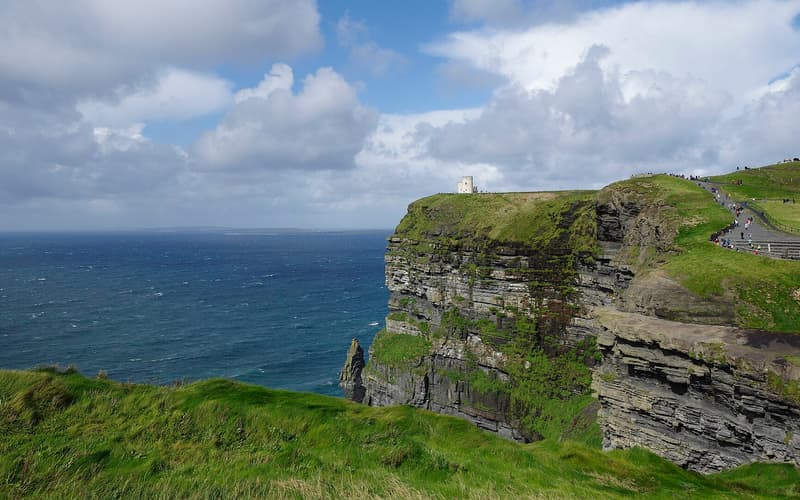
School holidays across Europe and North America. Everything is open and every boat is running, but the Ring of Kerry, the Cliffs of Moher and the Giant’s Causeway are at their most crowded and accommodation in small towns can sell out. Reserve rooms, hire cars and timed tickets well in advance.
Shoulder season: April to June, September and October
The sweet spot. May and June combine the longest days with lower prices than midsummer; September is settled and sociable. By mid-October some seasonal ferries and island services have stopped.
Low season: November to March
Great for Dublin, Belfast, Galway, Cork and Kilkenny, where museums and pubs carry on regardless and hotel rates are at their lowest outside Christmas, New Year and St Patrick’s week. Less suited to the far west: Skellig Michael is closed, many B&Bs shut, and short days limit touring.
Festivals and events calendar
Dates move from year to year — check before you plan around one.
- Late January: TradFest, Dublin — traditional and folk music in Temple Bar and historic venues.
- Around 17 March: St Patrick’s Festival — a multi-day programme in Dublin culminating in the parade on the 17th, a public holiday in both jurisdictions, with parades in almost every town.
- Early May: Cathedral Quarter Arts Festival, Belfast.
- June bank holiday weekend: Cat Laughs comedy festival, Kilkenny.
- 16 June: Bloomsday, Dublin — readings and costume in honour of Joyce’s Ulysses.
- July: Galway International Arts Festival, then the Galway Races at the end of the month; the All-Ireland hurling and football finals at Croke Park in Dublin (held in July in recent years — check); Willie Clancy Summer School of traditional music in Miltown Malbay, County Clare.
- 12 July: Orange Order parades in Northern Ireland; a public holiday there.
- August: Fleadh Cheoil na hÉireann, the great traditional-music festival (host town changes); Kilkenny Arts Festival; Puck Fair in Killorglin, Kerry (10–12 August); Rose of Tralee; the Ould Lammas Fair in Ballycastle on the Causeway Coast at the end of the month.
- September: Galway International Oyster and Seafood Festival; the matchmaking festival in Lisdoonvarna, County Clare.
- October: Dingle Food Festival; Kinsale Gourmet Festival; Belfast International Arts Festival; Guinness Cork Jazz Festival on the late-October bank holiday weekend; Derry Halloween, one of Europe’s largest Halloween celebrations.
- December: Christmas markets in Belfast, Galway and elsewhere; Other Voices music festival in Dingle; the winter-solstice sunrise at Newgrange (entry to the chamber by lottery).
Our advice in one paragraph
For a touring holiday, come between mid-May and late June or in September. For a city break, any time — but avoid St Patrick’s week unless the festival is the point. For the lowest prices, November and January to February. Whenever you come, bring a waterproof and plan one flexible day for whichever sight most needs clear weather.