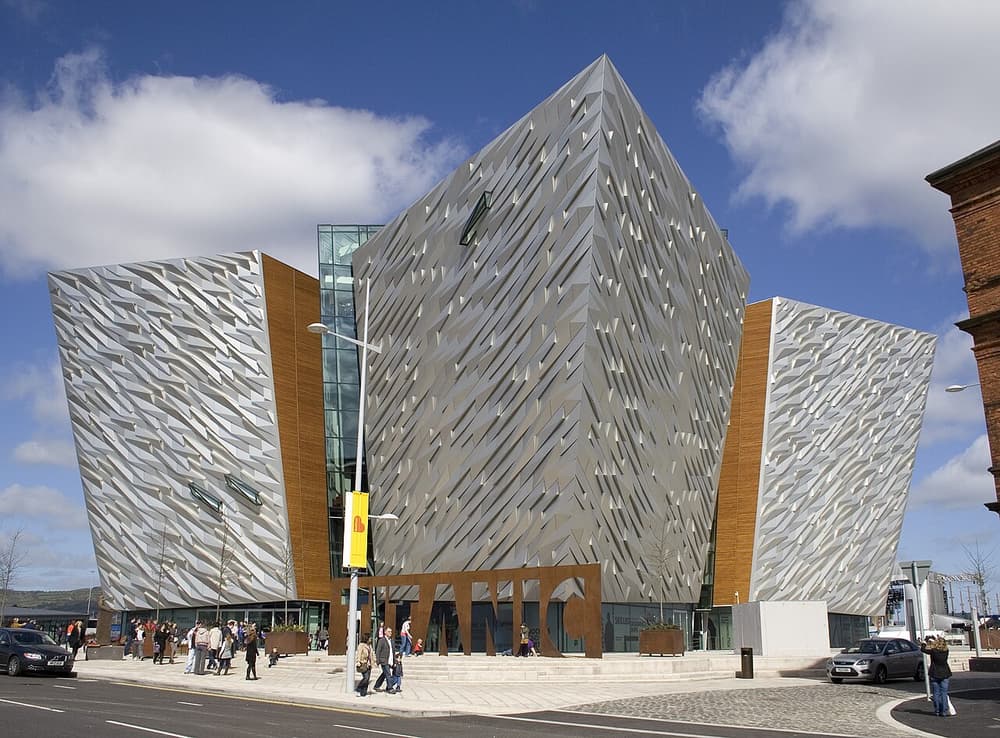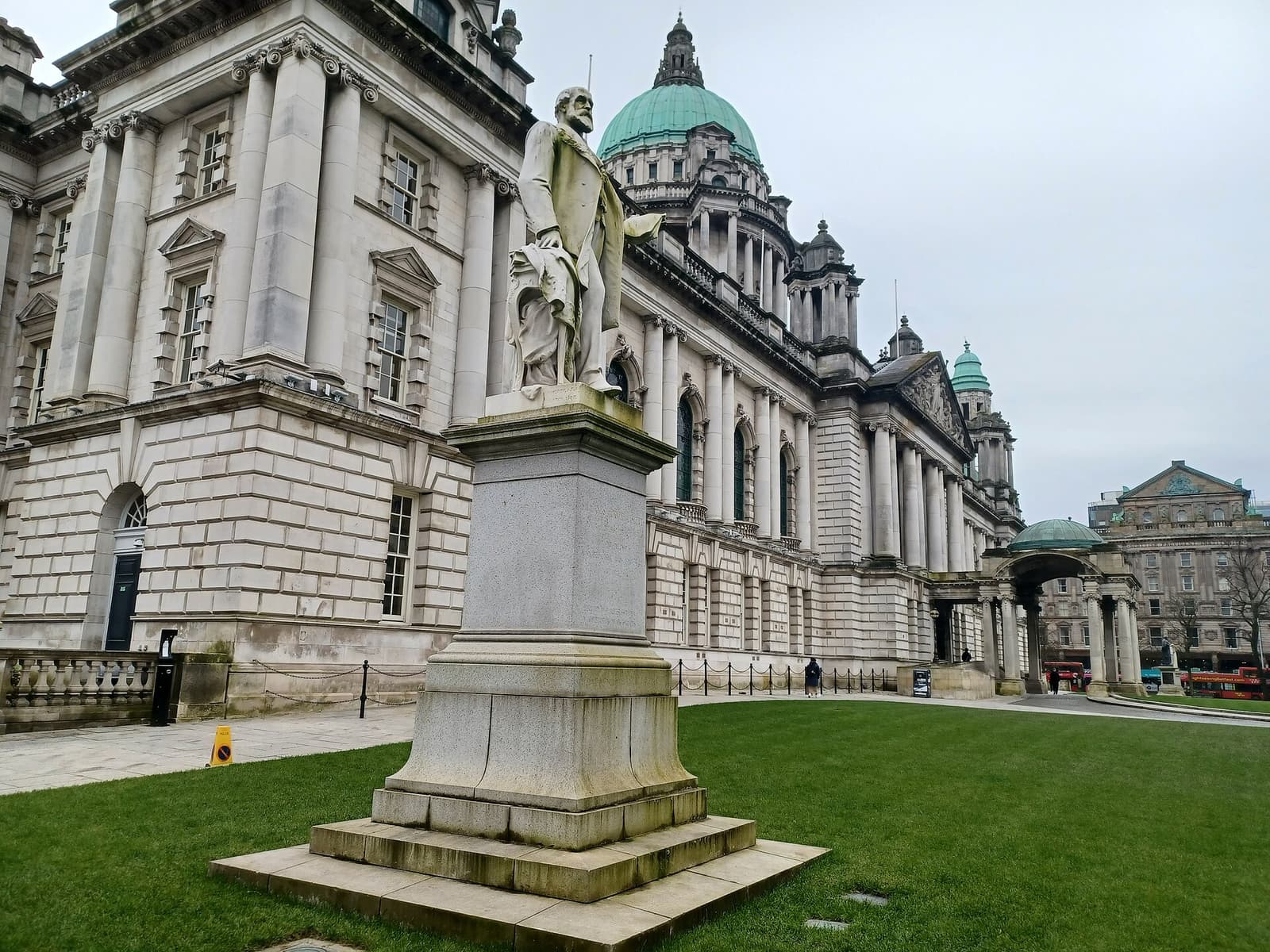
Belfast grew rich in the nineteenth century on linen, rope and ships; its City Hall, Opera House and gin-palace pubs date from those boom years, and the great yellow gantry cranes of Harland & Wolff still mark the skyline. In the shipyard where RMS Titanic was designed, built and launched stands Titanic Belfast, the city’s outstanding attraction.
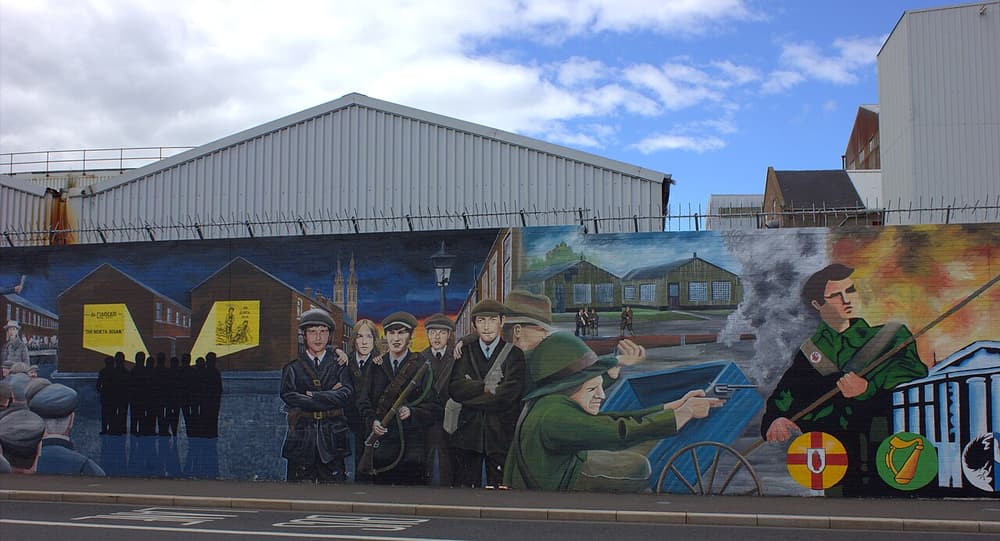
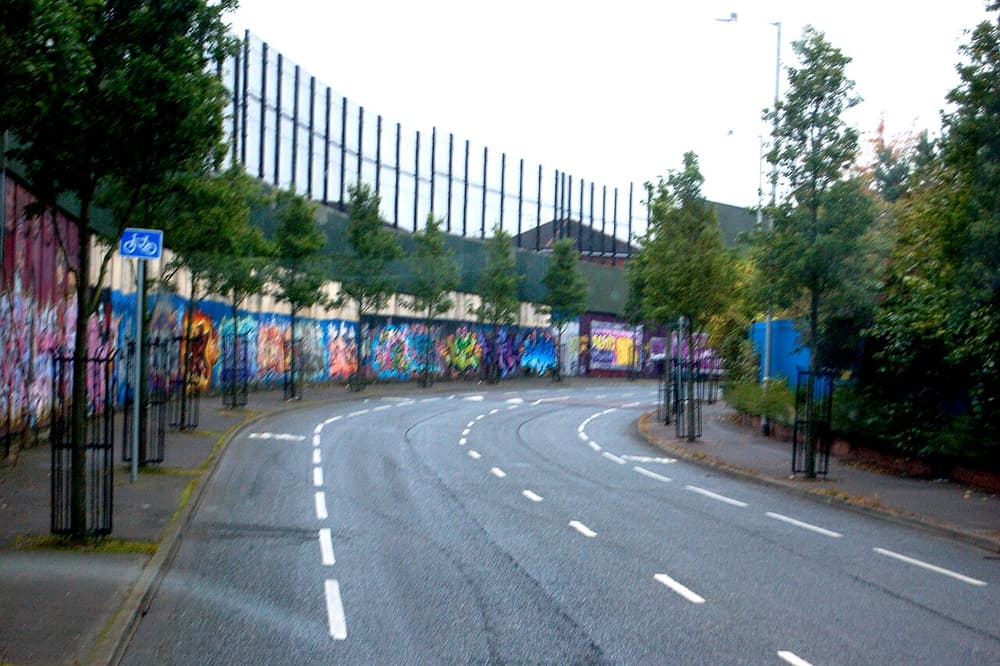
From the late 1960s to 1998, Belfast was the centre of the conflict known as the Troubles. The peace that followed the Good Friday Agreement has held, and visitors are warmly welcomed in every part of the city. The political murals and peace walls of the west remain, and a guided tour of them — by black cab or on foot — is the most thoughtful way to understand what happened here. Belfast is also the natural gateway to the Causeway Coast, about an hour and a quarter north.
Highlights
- Titanic Belfast and the SS Nomadic, on the slipways where the liner was built.
- A black-cab tour of the Falls and Shankill murals and the peace walls.
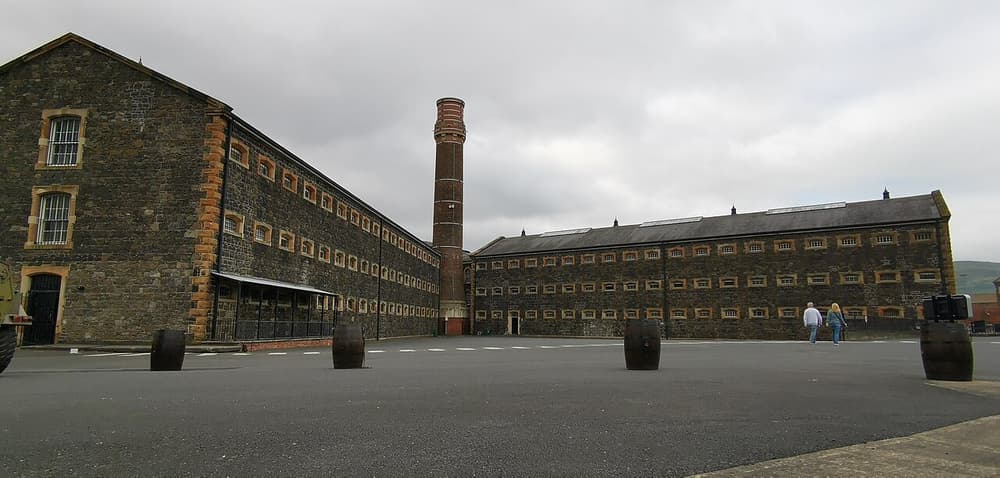
- Crumlin Road Gaol — a Victorian prison that held inmates until 1996.
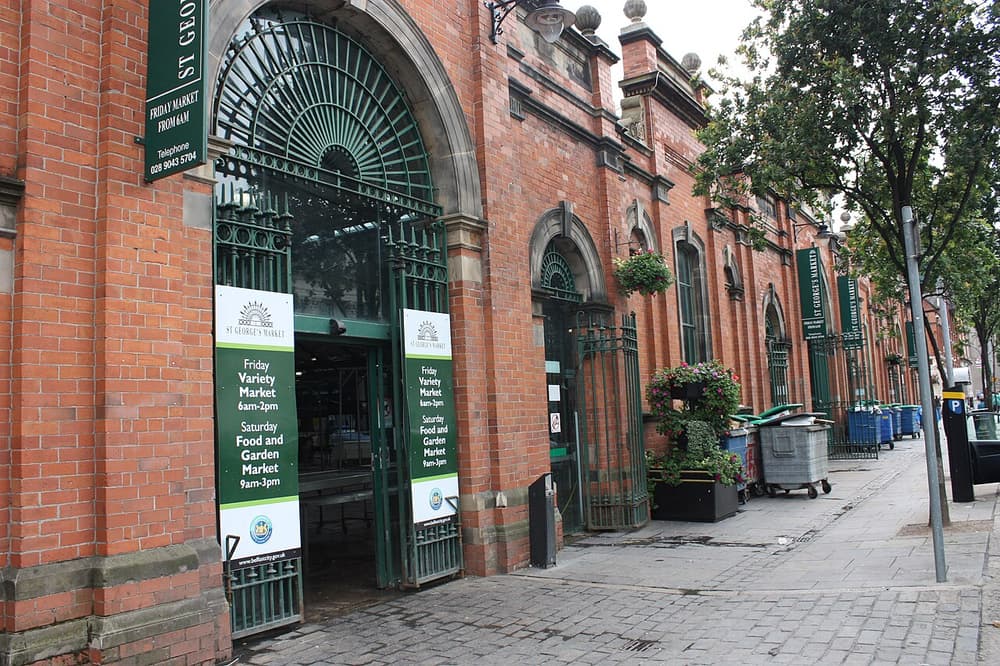
- St George’s Market — food, crafts and live music from Friday to Sunday.
- The Cathedral Quarter — cobbled lanes, street art and the city’s best pubs.
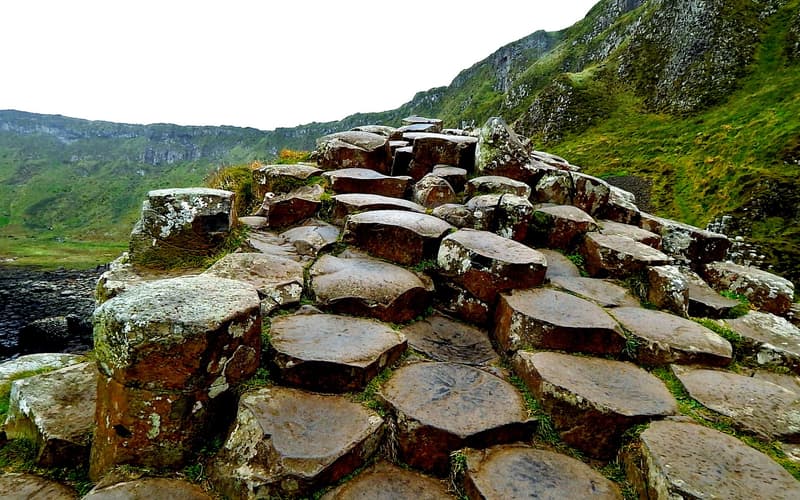
- Day trips to the Giant’s Causeway and the Antrim coast.
Quick facts
| Where | North-east of the island, at the head of Belfast Lough |
|---|---|
| Jurisdiction | Northern Ireland, United Kingdom — pound sterling (£), mph |
| Gateway | Belfast City (BHD) and Belfast International (BFS) airports; Dublin about 2 hours by train, coach or car; ferries from Scotland and England |
| Ideal stay | 2 nights |
| Best for | Maritime and political history, architecture, pubs and food, Causeway day trips |
| Getting around | On foot, Metro buses and the Glider rapid bus |
How long to stay & where to base yourself
Two nights gives a day for Titanic Belfast and the centre and a day for a political tour and the Gaol — or a Causeway Coast day trip. Stay in the city centre or the Cathedral Quarter to walk everywhere; the Titanic Quarter is quieter and right beside the museum; the Queen’s Quarter around the university is leafy, with good cafés and the Ulster Museum.